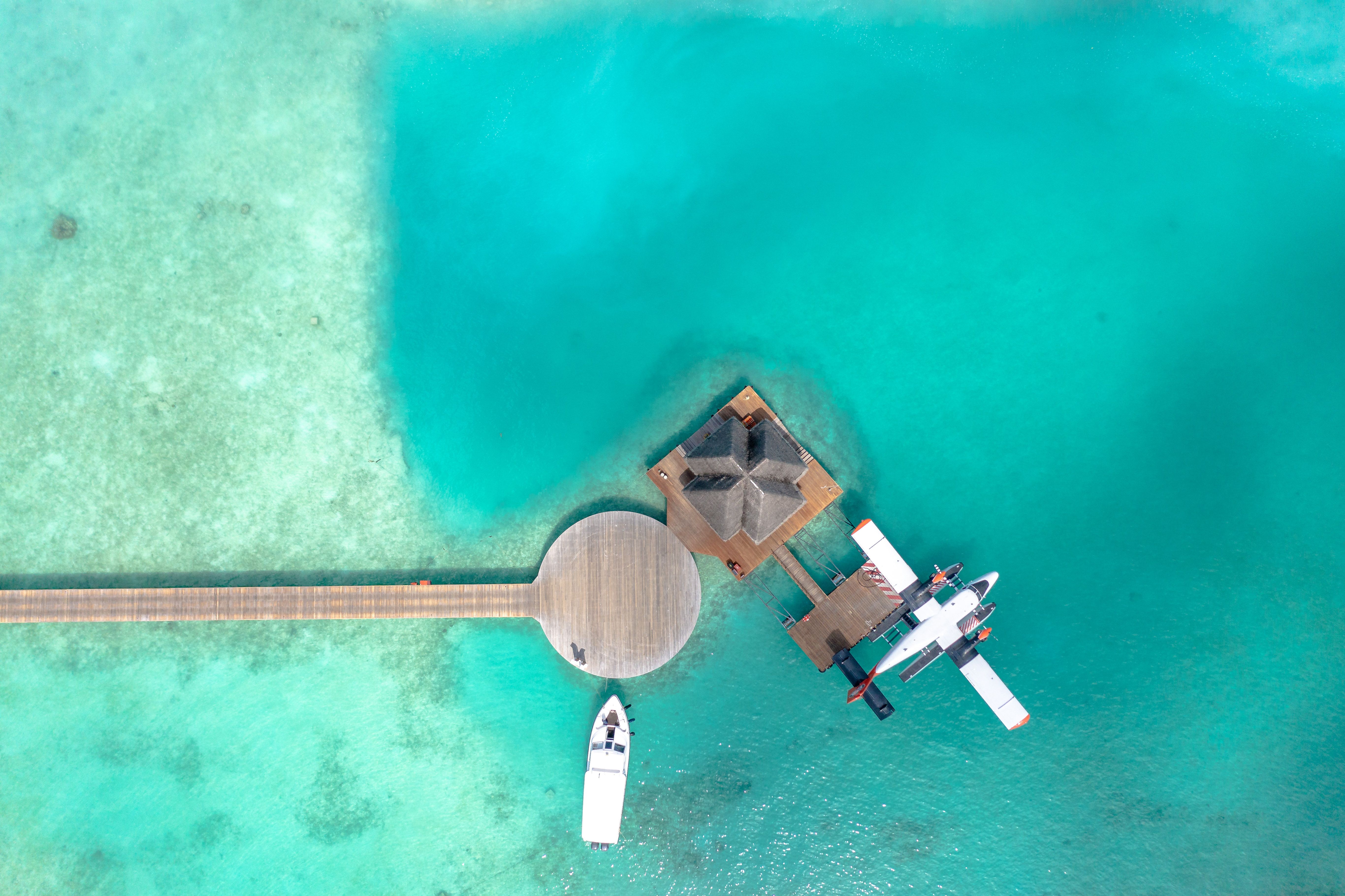
The phrase "Maldives island trip" is essentially tautological — every trip to the Maldives is an island trip, since the country consists entirely of islands. But the type of island matters enormously, and it's the first decision that shapes everything else about the trip: how you get there, what you pay, what you do, and what the experience actually feels like day to day. This guide works through that decision and everything that follows from it.
On this page
- The three types of island stay
- Resort island: what you get
- Local island: what you get
- Day trip islands: sandbanks and uninhabited islands
- Choosing the right atoll
- How to get between islands
- Planning a multi-island vacation
- Complete trip-planning timeline
- FAQ
The three types of island stay
There are fundamentally three types of island stay in the Maldives, each with a distinct price, atmosphere, and experience profile.
| Type | Cost | Best for |
|---|---|---|
| Private resort island | ₹18,000–₹1,00,000+ per night | Honeymooners, couples, premium experience, all-inclusive convenience |
| Local island guesthouse | ₹4,000–₹10,000 per night | Budget travellers, solo travel, cultural experience, longer stays |
| Liveaboard dive boat | ₹15,000–₹30,000 per day | Serious divers wanting access to multiple dive sites across atolls |
Most travellers planning a "Maldives vacation package" are researching the private resort island option, which is what the majority of this site covers. The local island option is covered in detail in our budget resorts guide. Liveaboard boats are a specialist market outside the scope of this site but worth knowing exist for dive-focused travellers.
Resort island: what you get
A private resort island in the Maldives means exclusive use of an entire island — no local community, no non-guests, just the resort's own villas, restaurants, spa, and beach. The smallest resort islands have fewer than 30 villas; the largest have over 200. The exclusivity is both the main appeal and the main justification for the significant price premium over a local island stay.
Within the resort island category, the quality range is wide — as covered in our best resorts guide, the star rating and the marketing photography are much weaker guides to actual quality than house reef condition, island size relative to guest capacity, and meal plan terms. A mid-tier resort island at ₹18,000–₹25,000 per night all-inclusive can deliver a more satisfying experience than a poorly designed luxury property at triple the rate.
Local island: what you get
A local island guesthouse puts you on an inhabited Maldivian island — one of the roughly 200 islands where actual Maldivian communities live, fish, and work. Tourism on these islands has been permitted since 2010, and a robust guesthouse industry has grown up on the most accessible ones, covered in detail in our budget resorts guide.
The experience is fundamentally different from a resort island: you're part of a community rather than isolated from one, food is often eaten at local restaurants rather than resort restaurants, and a designated "bikini beach" area serves as the swim spot rather than an unlimited private beach. The trade-off delivers a significantly lower per-night cost and a genuinely different window into the Maldives than a private resort provides.
Day trip islands: sandbanks and uninhabited islands
Beyond your base island (whether resort or local), many Maldives trips include a day trip to a sandbank or uninhabited island — a bare strip of sand in the middle of the lagoon, often only a few hundred metres long, accessible by a short boat trip from your resort. These sandbank trips, covered as one of the most memorable romantic experiences in our romantic things to do guide, are typically included in resort activity menus or available as a paid excursion from local island operators.
Sandbanks appear and disappear with tidal cycles and sediment movement, which is part of what makes them feel so temporary and special — the same sandbank might be underwater or barely visible at high tide and then emerge into a full white sand strip at low tide. Checking the tide schedule with your resort or guesthouse before booking a sandbank picnic is a practical step that most guests skip but that meaningfully affects the experience.
Choosing the right atoll
The Maldives is divided into 26 atolls, but most travellers only need to understand the practical distinction between a few key groupings.
- North and South Malé Atoll — closest to the airport, speedboat access in under an hour, widest range of resort options from budget to luxury. The right choice for short trips and first-time visitors.
- Ari Atoll — one of the larger and more popular atolls, slightly further from Malé (typically speedboat + short transfer), excellent for whale shark sightings and strong house reefs.
- Outer atolls (Baa, Lhaviyani, Addu, Haa Alifu) — the most remote resorts, seaplane or domestic flight access, the strongest biodiversity, the highest prices, and the maximum sense of isolation. Suited to longer stays.
How to get between islands
This is one of the most practically important things to understand about Maldives travel before booking, since the transfer type constrains your itinerary in ways that aren't obvious from a resort's marketing page.
- Speedboat — fast (20–60 min), available any hour, relatively low cost (often included in the resort rate). Serves resorts in Malé and nearby atolls.
- Seaplane — 15–40 minute flights offering extraordinary views; operates only in daylight; seats are limited per flight. This is the most important timing constraint in Maldives travel — your international flight must land early enough to connect with the last seaplane departure of the day, or you'll need an additional overnight in Malé.
- Domestic flight — used for the furthest southern atolls; adds 40–60 minutes plus the airport time at each end. Some resorts combine a domestic flight and a speedboat for the final leg.
Planning a multi-island vacation
Moving between resort islands mid-trip, covered in detail in our 7D6N itinerary guide for the split-stay option, is possible and increasingly popular for travellers who want to experience both a speedboat-zone resort and a more remote outer atoll property in one trip. The minimum practical length for a genuine two-island split is 7 nights (3+3 with a transfer day), and the logistics require coordinating resort checkout, inter-island transfer, and resort check-in on the changeover day — worth planning explicitly rather than leaving to arrival-day improvisation.
Complete trip-planning timeline
| When | What to do |
|---|---|
| 3–4 months before (peak season) | Set budget, choose trip length, shortlist resorts, book resort and flights |
| 6–10 weeks before (shoulder/off-peak) | Same as above — adequate for most non-peak travel windows |
| 4–6 weeks before | Purchase travel insurance, apply for any required visas, begin packing list |
| 2–4 weeks before | Complete resort pre-arrival questionnaire; book spa, beach dinner, or excursion slots |
| 1 week before | Save booking confirmations and return ticket offline; convert currency; confirm transfer timing with resort |
| Day before | Reconfirm seaplane or speedboat transfer time; ensure passport is accessible, not packed deep in luggage |
Frequently asked questions
What is the difference between a resort island and a local island in the Maldives?
A resort island is a privately operated tourist property where only resort guests stay — fully exclusive, no local community, priced at a significant premium. A local island is a government-inhabited island where Maldivian families live, with guesthouses for tourists at a much lower cost. Both offer lagoon and beach access, but the atmosphere, price, and experience are fundamentally different.
How do you get from island to island in the Maldives?
The Maldives uses three main inter-island transfer types: speedboats (fast, 20–60 minutes, run by resorts from Malé airport for nearby atolls), seaplanes (15–40 minute flights, daylight only, for more remote atolls), and domestic flights for the furthest atolls. The transfer type is determined by which atoll your resort is in.
What a first Maldives island trip looks like
For a first-time visitor, the sequence of a Maldives island trip typically unfolds like this: a flight landing at Velana International Airport in Male, a short wait at the speedboat pier or seaplane terminal, a transfer of 20-40 minutes (speedboat) or a 30-minute scenic flight (seaplane) to your resort island, check-in, and then the moment of first seeing the lagoon. Most first-time visitors describe this first-lagoon moment as the most vivid memory of the whole trip -- the colour of the water is genuinely unlike anything visible from a mainland.
The rest of the island trip then unfolds in the resort's own rhythm: meals at the included restaurants, morning snorkelling, afternoon naps, sunset watching, and the one or two booked experiences that punctuate the deliberately unscheduled middle. Our tour plan guide covers the optimal activity structure in detail; the short version is that less planning produces a better first Maldives island trip than more.
Planning your island trip around the transfer timing
One of the most practically important decisions in a Maldives island trip is what time your international flight lands, specifically in relation to the transfer schedule. For speedboat-access resorts, this matters less -- speedboats run throughout the day until fairly late. For seaplane-access resorts, the seaplane only operates in daylight, which means a flight landing at 4pm or later may mean an overnight stay near the airport before the resort transfer the next morning. This is covered in our complete package guide, and is the main structural constraint to build around when booking a seaplane-zone island stay.
Related reading
For the full cost breakdown behind this guide, see our trip cost breakdown, or for the resort-selection criteria, our best resorts guide.
Some links above are affiliate links. If you book through them, we may earn a small commission at no extra cost to you.